
All Things RE: Development, Issue 002
RE:View in Progress
Welcome back to All Things RE:Development — a blog on what's changing in permitting and commercial construction, and what's still getting worked out underneath the headlines. Most issues break down a policy or program change against a real project. This one's a little different: it's the first entry in "RE:View in Progress," a new recurring segment where, every month, we check in on a different Southern California building department — what's already working, what's still in progress, and how to plan around it while they get there.
First up: the City of Long Beach.
Watch Episode 1 now: RE:View in Progress — Long Beach on YouTube. Then keep reading — there's more here than fit in five minutes.
RE: Long Beach Right Now
Before we get into permitting specifics, worth naming what's actually working in this city beyond the building department. Long Beach is having a real moment. Anduril Industries — the defense-tech company reshaping Orange County's industrial market — just broke ground on a $1 billion, 1.18-million-square-foot campus spanning Long Beach and neighboring Lakewood, expected to support roughly 5,500 direct jobs when it opens in 2027. Aerospace and defense manufacturing already generates about $12 billion annually in the city, and the Port of Long Beach's international trade and logistics operations contribute roughly 30% of total city GDP. Tourism and hospitality add another $6.8 billion a year, and the city hosted related activity through this summer's World Cup, with more on deck as it prepares for the 2028 Olympics. On education: six Long Beach Unified schools were named 2026 California Distinguished Schools, and the district remains a national winner of the Broad Prize for Urban Education, America's top honor for public school systems. That's the foundation this permitting story is built on.
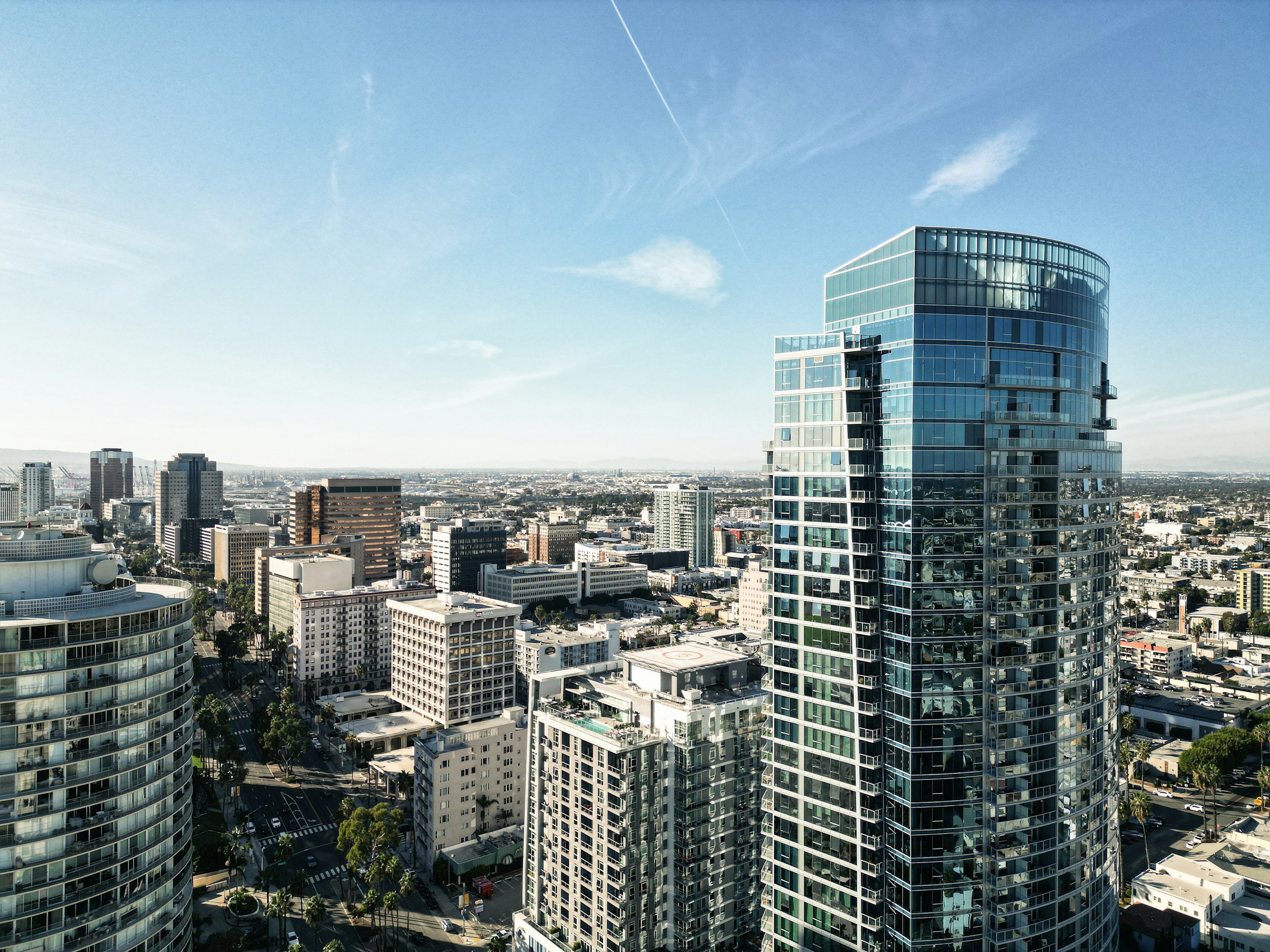
RE: The Department
Long Beach is one of the only jurisdictions in Southern California where we can hand a client an actual permit schedule for a tenant improvement before submittal — and tell them, with confidence, we're going to hit it. Here's the fast version before we get into why:
Submittal method: Initial submittal for a building permit happens in person at the Permit Center, by appointment — though walk-ins are accommodated if needed. Fees are issued on the spot at submittal, so there's no separate wait just to find out what a project will cost to review.
Current review times: Expedited review runs about 10 working days, subject to reviewer availability. Regular review runs 4 to 5 weeks. Rechecks typically turn around within 10 working days.
Resubmittals: No clunky, nonintuitive portal you have to learn — revisions go straight to email with the assigned reviewer.
Concurrent reviews: Plans route to Fire, Planning, Engineering, and Health — when those departments apply to the project — alongside Building & Safety, but corrections from each department come back, and get resubmitted, independently rather than as one unified round.
Where it all happens: Long Beach City Hall / Civic Center, 411 W. Ocean Blvd.
Where Long Beach's Fees Land
Every California building department prices plan check off the same underlying input — project valuation — whether they express it as a straight percentage, a tiered table, or an hourly rate on top of a valuation-based base fee. The delivery mechanism changes city to city; what's actually driving the number doesn't. That means fees are genuinely comparable at a fixed valuation, even between a percentage-based city and a tiered one.
| Jurisdiction | Plan Check (% of Permit Fee) |
|---|---|
| San Diego | 65% |
| Irvine | 65% |
| Oakland | ~65% |
| Santa Monica | 65% (building), plus a separate 35% commercial / 20% residential engineering review layered on top |
| Costa Mesa | 65–80% |
| Long Beach | 75% |
| San Francisco | 65–85% |
| Los Angeles | 85–90% |
| Palo Alto | 125% (residential categories) |
Run a $1M project through Long Beach's actual fee schedule and the number holds up: the current building permit fee for a $1,000,000 valuation is $6,506, and at 75% plan check plus the standard surcharges, that's roughly $12,600 in combined building permit and plan check fees — before a single trade or department gets involved. That lands right where the general California literature puts valuation-based permit costs: most sources peg the statewide range at 0.5% to 2% of construction valuation for base permit fees, and Long Beach's building-only total sits comfortably inside that band, closer to the middle than either edge.
That $1M figure is also a useful way to read the table above with real weight behind it. Applying that same range of plan-check percentages to Long Beach's own $6,506 base permit fee, just to isolate what the rate spread alone is worth in dollars: a 65% rate (Irvine, Oakland) works out to roughly $4,230 in plan check, Long Beach's own 75% comes to about $4,880, and Palo Alto's 125% would run closer to $8,130 — nearly double the low end, on identical valuation. That's illustrative, not each city's actual total (their base fees differ too), but it puts real weight behind what "65% vs. 125%" means once it's not just a percentage on a page. Please keep in mind that these figures reflect standard-track review pricing, and that expedited review adds an additional fee not reflected in this comparison.
One real structural exception worth knowing: San Diego doesn't price most building permits off valuation at all — the city uses square footage instead, so a $1M valuation doesn't translate into San Diego's fee schedule the same way it does everywhere else on this list. That's not a gap in the numbers; it's a genuinely different pricing philosophy, and worth knowing before assuming any city's fee structure will translate cleanly to another.
Where the real Long Beach number comes from isn't the surcharges — it's what's itemized. The 5.5% Technology and 5.5% General Plan surcharges get all the attention because they're percentages, but they're not what actually moves a project's total cost. What does: MEP — mechanical, electrical, and plumbing — are billed as entirely separate permits from the base building permit, not folded into one number. Planning, Fire, Health, and Engineering review, when a project triggers them, get bundled into that same building fee — itemized as their own line items on the one invoice issued in person, not paid out as separate transactions. And if any of those departments' timelines need to be compressed, their expedited review fees show up as their own line item too — an expedited Building & Safety review doesn't buy an expedited Fire review. Budgeting off the base building permit number alone is how a project's real cost ends up surprising people; there are several line items stacked into that one invoice, not just one number.
Impact Fees: Parks, Traffic, Water — The Costs Plan Check Doesn't Show
Plan check gets all the attention because it's the fee people can actually shop around and compare. Impact fees are the ones that quietly move the real budget — and they show up under a lot of names: transportation and traffic impact fees, park and recreation fees, water and sewer capacity fees, school fees, and — in cities like Oakland — dedicated affordable housing and jobs/housing impact fees. Every California jurisdiction assembles its own stack from some combination of these, which is exactly why two cities with similar plan check percentages can land on very different total project costs.
There's a genuine statewide ceiling worth knowing regardless of jurisdiction: as of a January 2026 State Allocation Board adjustment, school districts statewide are authorized to collect up to $5.38 per square foot on residential development and $0.87 per square foot on commercial development under the standard "Level 1" developer fee — though districts that qualify under stricter criteria can charge higher "Level 2" or "Level 3" fees on top of that baseline. That cap applies almost everywhere in California; it's set by the state, not the city.
Beyond schools, impact fees vary enormously by jurisdiction and project type. A few real data points to calibrate expectations: Fresno's impact fees run roughly $2 to $15 per square foot depending on project type and location, and a 2026 Terner Center analysis of California housing developments found impact fees averaging nearly $20,000 per unit statewide, with some projects exceeding $30,000 per unit depending on scope and jurisdiction. For Long Beach specifically, the Inclusionary Housing Ordinance functions as its own kind of impact requirement on the housing side — a set-aside percentage rather than a flat per-square-foot fee — which is a structurally different (and, depending on the project, potentially more or less costly) approach than a straight impact fee city.
The takeaway for anyone budgeting a project: plan check percentage tells you what a city charges to review your plans. It tells you almost nothing about what a city will charge in impact fees once those plans are approved — and that second number is often the bigger one.
RE: Leadership Sets the Tone
If there's one thing that sets Long Beach apart, it isn't a piece of software or a policy change — it's culture, and that starts at the top. Community Development Director Christopher Koontz has built a department where accessibility isn't a stated initiative, it's the baseline expectation, and that expectation clearly carries down through every level of staff. Walk up to any counter at the Permit Center and there's actually someone there to help — which sounds like a low bar until you've worked with a city where "open" and "staffed" turn out to be two very different things. Long Beach staff pick up the phone, answer email, and offer virtual appointments for anyone who doesn't need to make the trip in person.
That same culture carries through once a project is actually submitted. Most plan check happens in-house, across departments, under one roof, and corrections come back through direct email with the actual reviewer assigned to the project — no clunky, nonintuitive portal to learn, no idiosyncratic naming conventions to decode, no guessing which upload field a revised sheet belongs in. It's a system that rewards familiarity: the first project through takes some getting used to, and every project after that gets easier.
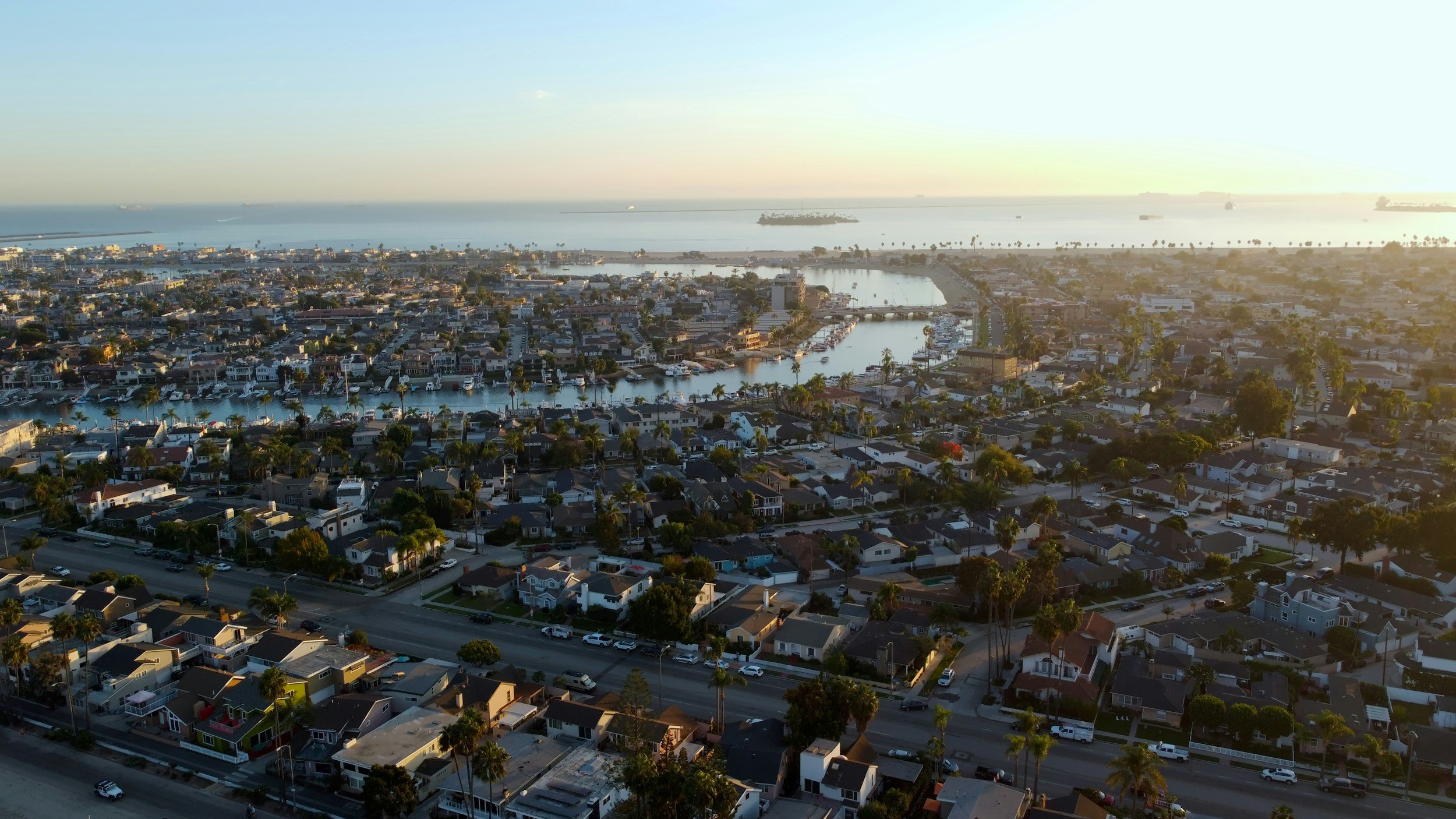
RE: The Housing Pipeline
Housing — particularly affordable and mixed-income housing — is one of the largest development pipelines in the state right now, which is why it earns a dedicated look in every jurisdiction this series covers rather than a passing mention.
On paper, Long Beach has real tools to offer. The city's Enhanced Density Bonus Ordinance grants density increases and development concessions to mixed-income multifamily projects without requiring a discretionary hearing, and the ordinance was recently expanded so a full 100% density bonus is now available regardless of where in the city a project sits. Projects that clear a high enough affordability threshold can also use the state's SB 35 process, which bypasses Long Beach's standard entitlement timeline — and CEQA review — entirely for qualifying applications.
One thing worth confirming directly, since it comes up often: Long Beach doesn't have its own dedicated local streamlining ordinance specifically for 100%-affordable projects, separate from what state law already provides. A fully affordable project here runs on the same statewide tools available in any California city — SB 35, its 2023 expansion SB 423, and AB 2162 for supportive housing — plus the Enhanced Density Bonus Ordinance, which isn't 100%-affordable-specific but does scale up to its full bonus at high affordability levels.
For everyone in between — the mixed-income projects that don't cleanly clear SB 35's affordability threshold — the standard entitlement process still applies, now layered with the citywide Inclusionary Housing Ordinance. That ordinance started in 2021 as a Downtown-only requirement before expanding citywide, and it phases in a required affordable set-aside: 6% in 2025, 8% in 2026, and 12% by 2027. The tools genuinely exist. How easily a given project can actually use them still depends heavily on where it lands on that affordability spectrum.
RE: The Entitlement Timeline
For projects that need a discretionary entitlement — not just a building permit — Long Beach Planning maintains its own internal process map. We won't reproduce it here, but the realistic timeline it implies is worth understanding before anyone asks for a hard date.
The honest headline number: a straightforward entitlement, with no CEQA complications and no appeal, realistically runs 2.5 to 4 months from a complete application to a final local decision — and that's before building plan check even begins. The single biggest wildcard inside that window is environmental review. A project that qualifies for a CEQA exemption, which is common for smaller infill or minor-alteration work, barely adds time. A project that triggers a full environmental study can add the better part of a year or more, since the applicant funds and drives that process rather than the city.
A few other timing details worth knowing going in: an application isn't actually considered submitted until a signed copy is uploaded and fees are paid, so an incomplete package doesn't start any clock. Once staff do pick it up, they're routing it to other departments — Fire, Public Works, Utilities — for comment before a project is even scheduled for a hearing, and a Notice of Incomplete Application can reset part of that early window if anything's missing. Not every project needs a public hearing at all; some approvals happen administratively. When one is required, the city typically schedules it within 60 days of a complete application, and decisions carry a standard 10-day appeal window. Anything inside the Coastal Zone's appealable area carries one more layer on top of that; a final local approval there can still be appealed up to the California Coastal Commission.
RE: Where It Gets Complicated
Not every friction point in Long Beach traces back to Building & Safety, and the ones that don't are worth knowing about in advance rather than discovering mid-schedule.
Health Department review is routed alongside the standard building plan check process, but it still runs on its own parallel timeline — bundled at submission doesn't mean bundled on the clock. The bigger nuance is physical, and it's worth contrasting against the staffed-counter access we talked about earlier: there's no public counter for Health at City Hall the way there is for Building & Safety. If a project needs to drop off material samples or meet an inspector in person for any reason, an assigned Health staffer has to come down to the lobby to meet you — there's no walk-up counter to handle it directly. It's a small logistics detail, but an easy one to forget to plan for until it's the thing holding up a sign-off.
Water is the bigger jump. Long Beach's water utility operates as its own independent jurisdiction entirely, with its own submission, its own review, and its own timeline running outside the rest of the building permit. And we're not even going to get into SCE.
One genuine point in Long Beach's favor here, worth naming directly: relatively little of this runs through Los Angeles County agencies, and that matters more than it might sound like it should. County-level review, on the occasions a project needs it, tends to run considerably longer than anything handled at the city level — so a Long Beach project that manages to stay largely within city departments is quietly avoiding one of the bigger timeline risks a Southern California project can run into.
None of this — Health, Water, or anything else outside Building & Safety's own walls — is a schedule killer, as long as it's in front of you early rather than something you're reacting to late. The projects that move fastest are the ones that stay on the second floor: no third floor for Planning, no fourth floor for Public Works, no other offices involved. The moment a project needs one of those additional floors, that's exactly where the extra planning needs to start.
RE: The Strategy
The upside to all of this: because Building & Safety's core process is so consistent, Long Beach is genuinely one of the few Southern California jurisdictions where a permit schedule built before submittal actually holds up in practice — provided Health, Water, and any entitlement requirements get mapped out as their own tracks from day one, rather than treated as afterthoughts once they surface. That holds even on projects that do need the third floor for Planning or the fourth for Public Works; those floors just get planned for up front, not bolted on once a project is already moving. Proactive, not reactive, is really the whole strategy in one phrase.
One caveat worth building into any client conversation: ordinances and fee schedules shift, and Long Beach has several genuinely in motion right now — the Inclusionary Housing rollout chief among them. Anything cited here is a snapshot, not a permanent number. Confirm current specifics before locking a schedule or a budget in front of a client.
If you're weighing a project against Long Beach's process — or want a second opinion on how Health, Water, or an entitlement fits into your timeline — that's a conversation worth having early. Reach out and we'll walk through it with you.
This post reflects justPermits' own professional experience working with California building departments. Observations are offered as general commentary and opinion, not statements of fact about any individual employee. Processes, timelines, and fees may change after publication — confirm current details with the relevant department before relying on them.
Consider Long Beach RE:Viewed — the progress continues next month.
